J. Michael Lennon

Archivist, Biographer, Educator

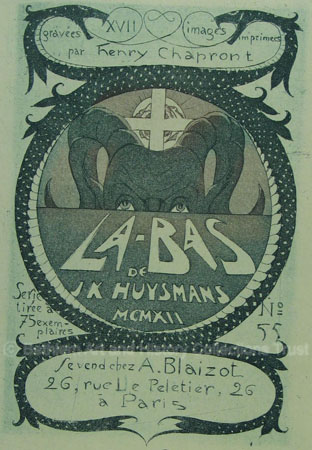
LDBTH111DID YOU KNOW? In 1976, Mailer published a screenplay based on Joris-Karl Huysmans’ novel of decadence and Satanism, Là-Bas (or “down there”). The English translation was published as The Damned. The protagonist, a novelist named Durtal, is researching the life of the 15th century nobleman and madman, Gillies de Rais, who killed scores of children and practiced various forms of sorcery, including a Black Mass. The novel is set in fin-de-siѐcle Paris, and was a sensation when it appeared in serial form in 1891. Mailer’s screen play appeared in Playboy in December 1976, and has never been reprinted. It won the magazine’s annual award for best piece of fiction.

Mailer spoke French fairly well, having studied it in high school, college and at the Sorbonne on the GI Bill in 1947-48. He said that “the French novel has always been more congenial to me than the English, and much of what I learned as a young novelist came from Stendhal, from Proust, and from Malraux.” He went on to say that he also enjoyed the writing of Flaubert, Zola, Gide, Huysmans, Baudelaire, Sartre, George Simenon, and the writing of his great friend, Jean Malaquais, who Mailer met in Pairs in 1947.

Publishing, Part 1

Mike discusses the publishing process. Video 1 of 3.

Barbara and Norris

Barbara Wasserman and Norris Church Mailer, 2009 (Photo: Donna Lennon)

Barbara Wasserman and Norris Church Mailer, 2009 (Photo: Donna Lennon)

Celebrity

September 2007

OLYMPUS DIGITAL CAMERA

Susan Mailer took this photo in mid-September 2007. With Mailer are, center, Bill Majeski (former New York City detective responsible for capture of Jack Abbott), and, right, Marco Colodro (Chilean economist who is married to Susan). Mailer left Provincetown for Brooklyn on September 22, and died at Mt. Sinai Hospital on November 10.

Mailer in Esquire

DID YOU KNOW? Esquire published more separate pieces, over 40, of Mailer’s work (fiction, essays, interviews, excerpts from forthcoming books) than any other publication. His first piece was a short story based on his experience as an army cook, “The Language of Men,” which appeared in the April 1953 issue. Excerpts from the following books appeared in Esquire: Advertisements for Myself, The Presidential Papers, An American Dream (the entire novel was serialized from January to August 1964), Cannibals and Christians, Existential Errands, Pieces and Pontifications and Harlot’s Ghost. He also wrote a monthly column for the magazine, “The Big Bite,” from November 1962 to December 1963. His last piece in Esquire was an interview with Tom Junod, “Last Man Standing,” in January 2007.

Jones’ Gusto, Embrace of Life Fascinated Mailer

I was sorting through some papers in preparation to pick up work on the edition of Mailer’s letters I am editing for Random House. I found a sheet of paper containing the citation accompanying the JJLS Lifetime Achievement Award given him at the Society’s meeting in Paris, June 22, 2002. It was a terrific conference, and Mailer, his wife Norris and George Plimpton did a reading of the letters of Hemingway, Scott and Zelda Fitzgerald at the American Church on Quai d’Orsay.

Scribbled on the paper were some of the things Mailer said about Jones when he spoke on a conference panel. He said, “Jones took beautiful swings at the bastards,” meaning no particular individuals, but the whole gamut of assholes and shits in contemporary society. He went on to say that in his writing he was fearless, and “pressed wounds to the other side.” Jones, he continued, “had his finger on the nation’s pulse for 40 years.” He ended his remarks with this: “Jones disabled the grief button by embracing life like no one ever has.”

These fragmentary notes made me recall a letter Mailer wrote to William Styron in July 1953, shortly after Mailer visited the Handy Writers Colony, and which I quote from in my forthcoming biography, Norman Mailer: A Double Life. Jones’ gusto always fascinated Mailer. Here is an excerpt from the letter:

Lowney Handy and Jones are people whom one can satirize so easily, and yet one’s missed it all, for both of them are such extraordinarily passionate people, that their errors as well as their successes have a kind of grotesque to them. Lowney Handy burns—I kept thinking of fanatics like John Brown when I looked into her eyes. Jones like all of us is having his troubles with the second book, but everything happens to Jonesie on so big a scale that his troubles are flamboyant next to ours, and involve money, movie scripts, gymnastics, obscenities, raw insecurity, triumphant phallicism and wham, wham, wham, it’s all explosion. With it all, I like him tremendously. I suppose I have the kind of friendship with him that I had when I was a kid with other kids.

From James Jones Journal (19.1) Spring 2013.

Norman and Gore

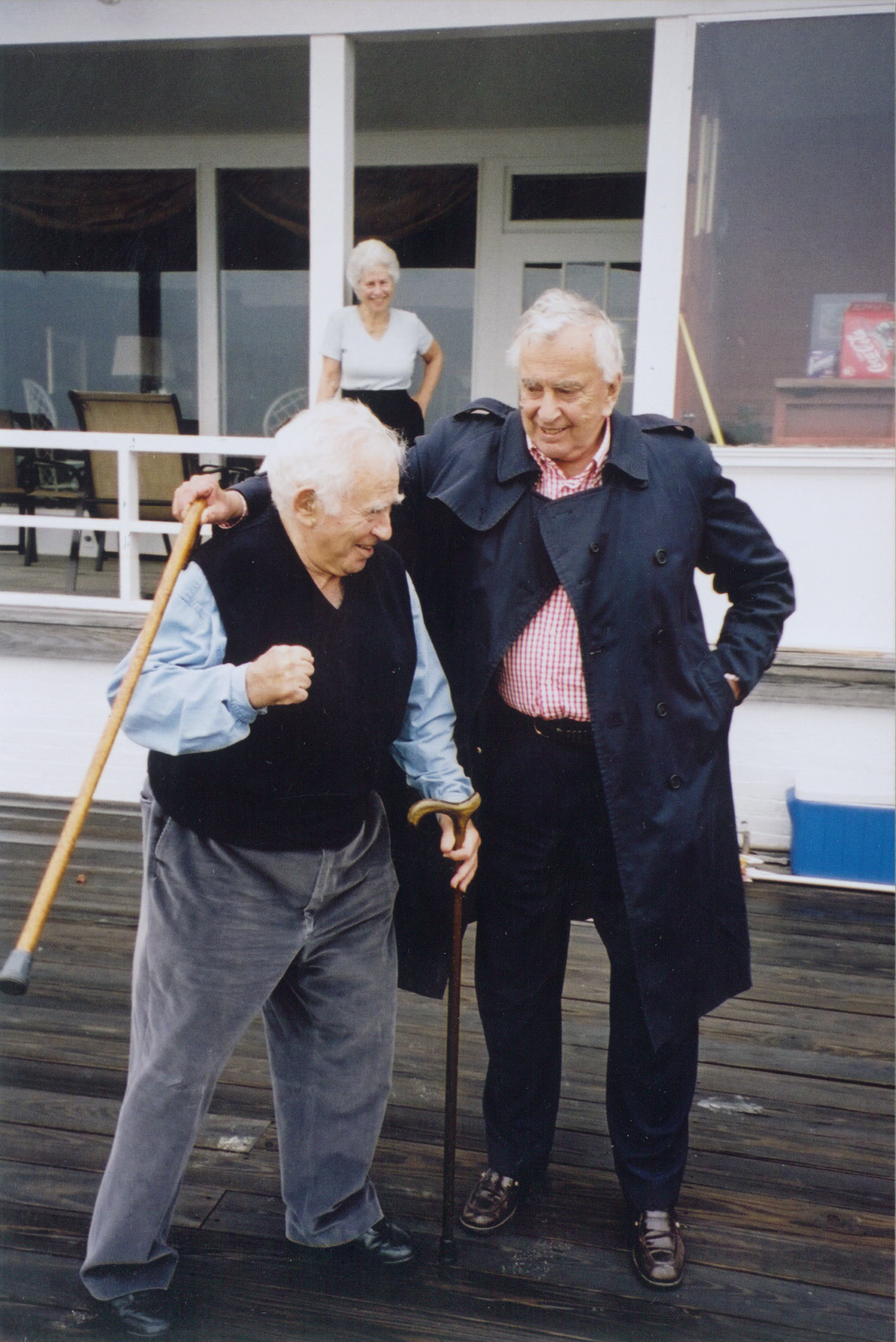
norman-gore

NM and Gore Vidal in Provincetown, November 2002. Photo by Norris Church Mailer.

See James Wolcott’s essay “The Devil and Gore Vidal” in Vanity Fair.

Ancient Evenings

armiesDID YOU KNOW? The Mailer book that received the best reviews was not his best-selling 1948 war novel, The Naked and the Dead, but a nonfiction book which was not a best seller, The Armies of the Night, his account of the October 1967 anti-war March on the Pentagon. Winner of a Pulitzer and the National Book Award, Armies barely edged out Naked, 4.100 to 4.031. These numbers were arrived at by rating the reviews his books received in 25 major publications (New York Times, Los Angeles Times, Time, Newsweek, New York Review of Books, National Review, EsquireChicago Tribune, Washington Post, Boston Globe, Commonweal, New Yorker, etc.) on a five-point, low- to-high scale, 1.0 for a dreadful pan, and 5.0 for an enthusiastic review with few caveats. Coming in third was Mailer’s 1972 collection, Existential Errands (3.777), and fourth, The Executioner’s Song (3.74). The book with the worst reviews was Mailer’s second book, Barbary Shore, a novel set in Brooklyn, which racked up a score of 1.944 (reviewers disliked the debates about politics and economics which take up half the novel). In next-to-last place is Portrait of Picasso as a Young Man, which totaled out at 2.000 (it was reviewed in large part by art critics and scholars, who felt Mailer was poaching on their turf). The publication that gave the most positive reviews to his work was The Village Voice, which he co-founded (3.929 average); the most negative reviews came from the liberal, anti-communist bi-weekly, The New Leader (2.167). Two others of note: The New York Times Book Review (3.111) ; and The New Yorker (2.846). A total of 417 reviews were rated for this study, which was published in the bibliography Lennon and his wife Donna Pedro assembled, Norman Mailer: Works and Days (Sligo Press, 2000).

Page 33 of 37

Powered by WordPress & Theme by Anders Norén