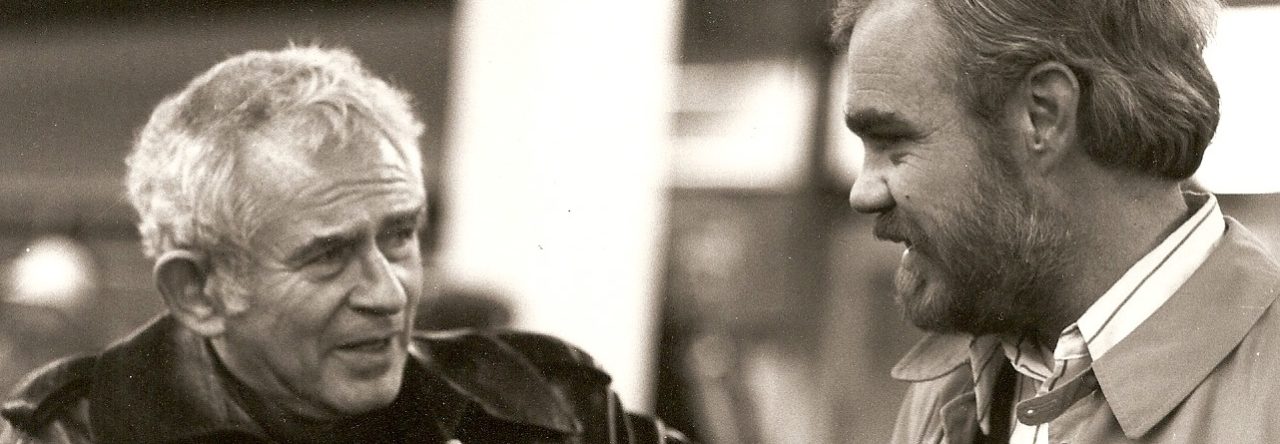
J. Michael Lennon

Archivist, Biographer, Educator

Ancient Evenings

Excerpt from a review of Ancient Evenings in the Springfield State Journal-Register, 4-17-83

In 1972, with twenty books behind him, Norman Mailer began to disengage from contemporary America, and started work on a novel that he hoped would “transcend the domination of actual events. The break was neither swift nor absolute, however. From 1972 to 1980 he published five books on four famous-infamous Americans: two on Marilyn Monroe, and one each on Muhammad Ali, Henry Miller and Gary Gilmore. Between spurts of work on these biographical books (which paid the bills), he labored deliberately on Ancient Evenings, a huge novel set in the Egypt of the 19th and 20th Dynasties (1290-1100 B.C.). Shell-shocked by the sixties, and depressed by the seventies, Mailer still understood that he would not be able to escape the temptation to speak directly to his time unless he chose a setting alien to Western culture, a setting so remote that historical memory could barely reach it, so far back in time as to stop it.

His original idea had been to write about Rome, Greece and Egypt, and he even made a trip to the Mediterranean to pick up some atmospherics. He never got past Egypt. Mailer was not impressed with present-day Egypt, but he immediately recognized what his extensive research confirmed: the Egypt of 3,000 years ago was swimming in religiosity, awash in faith. The citizens of Thebes and Memphis believed unreservedly in the Gods, and not as remote overseers, but as forces and presences in the smoke of the hearth and the mud of the Nile. Their nation was not a theocracy like Geneva or Plymouth Bay Colony; the priests were in liege to the pharaoh and he himself was a God. The reign of Ramses II, in which most of the action of Ancient Evenings takes place, is invested in magic and ceremony, blessings and curses. It was not a starched or stingy religion that these ancient Egyptians practiced, but a dynamic one, alternately graceful and fierce, always fervent. There was no separate secular life. The intrigues and projects of the Gods were manifested in the Egyptians’ prayers, fornications, marriages, and battles. Religion and sex, love and war: these are the four of the novel’s chief concerns.
The 10 Best Norman Mailer Books

There has been debate on whether Mailer’s greatest achievements are in fiction or nonfiction, but it is clear that he was ambidextrous, so to speak, excelling in both. I lean slightly toward his nonfiction in my picks.

Mike on Mailer

Featured in Shelf-Awareness.

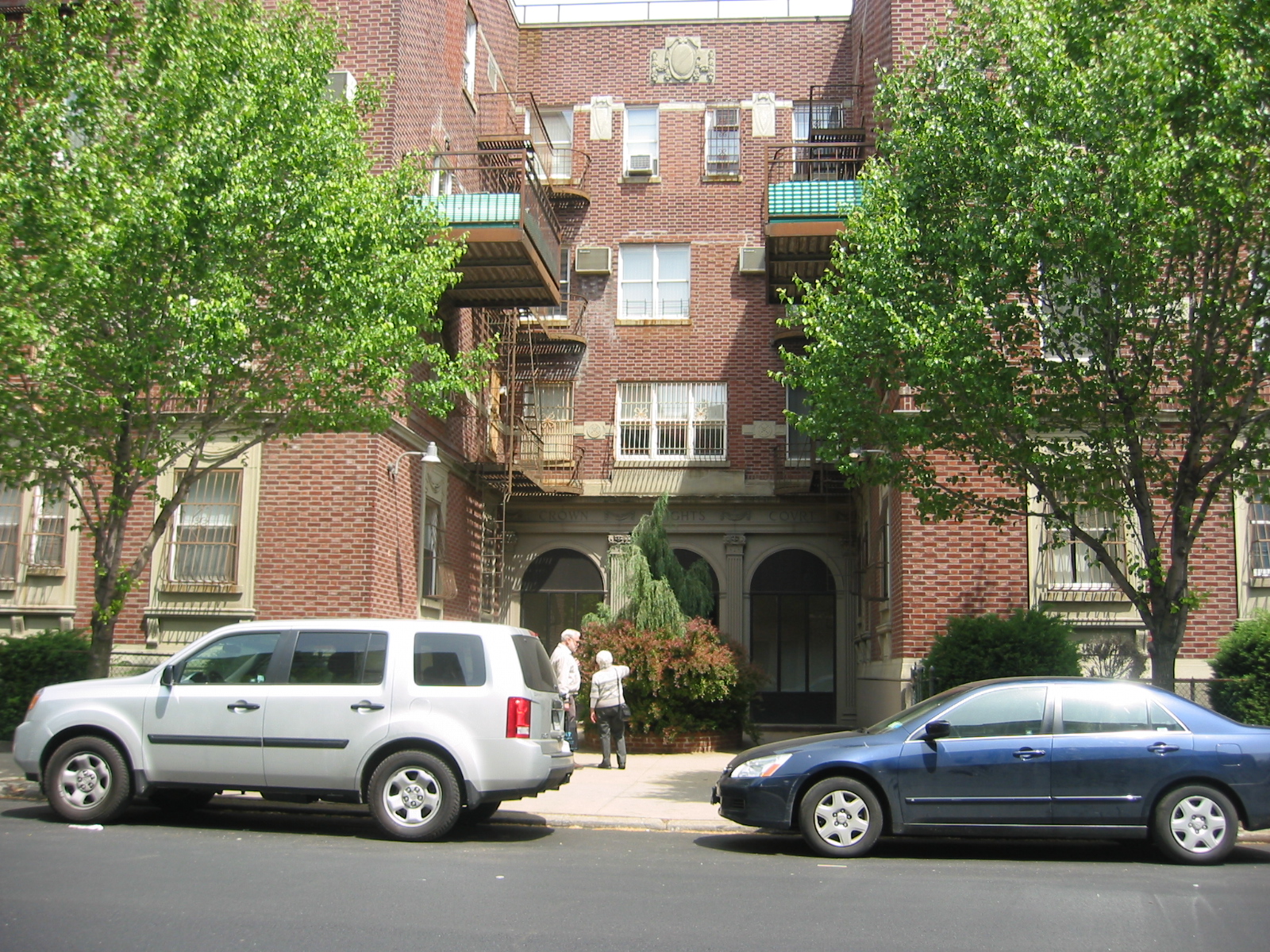
Crown Heights, Brooklyn

Crown Heights, Brooklyn.1

Mike and Barbara Wasserman. Photo by Donna Pedro Lennon.

Mike and Robert Lucid

Mike and Robert Lucid, NMS Conference 2005. Photo by Mark James.

Mike and Robert Lucid, NMS Conference 2005. Photo by Mark James.

A Conversation with Mike

Mike Says “Happy Oktoberfest”

mike_beer

Mike to Read at Wilkes University

7 p.m., Tuesday, Nov. 5, 2013

Ballroom, Henry Student Center

Wilkes University, 84 W. South Street, Wilkes-Barre

Book signing immediately following. Reception for Dr. Lennon following the reading in Kirby Hall.

Please RSVP by Friday, Nov. 1, to confirm your attendance at the reception by calling or emailing Rebecca Van Jura at 570-408-4306 or email [email protected]

Parking available behind Henry Student Center

Excerpt from “Mailer’s Radical Bridge”

Published in Narrative 7 (Fall 1977), 170-88.

“What is life but the angle of vision? A man is measured by the angle at which he looks at objects.” Emerson, “Natural History of Intellect”

Norman Mailer’s development as a writer parallels at every point his growing awareness of the difficulty, and doubtful wisdom, of attempting to separate his personal and artistic worlds. His desire to build “the radical bridge from Marx to Freud,” to link public event and private sensibility, was not announced until 1958. Before that time, incredible as it may seem given his ubiquitous presence in our literary life over the past ten or fifteen years, Mailer attempted to segregate his personal and artistic worlds. . . .

After writing and then fighting for the publication of The Deer Park, Mailer reconsidered the experience in a long essay later published in his omnibus volume, Advertisements for Myself (1959). By now, his perspective had begun to shift. The fact that he referred to Advertisements as “this muted autobiography”, and explained that he had “decided to use my personality as the armature of this work,” shows just how much his conception of the relationship between the artist and his work had begun to change. From the time of Flaubert on, writers began to see themselves more and more as aesthetic artificers and less as purveyors of the egotistical sublime. The role of the novelist as detached craftsman was refined and transmitted to the twentieth century by Conrad and James, and then further exalted by Joyce. As a young writer Mailer accepted implicitly the tradition of the novelist as a detached creator whose method was “objective” or “dramatic,” as René Wellek and Austin Warren define it, rather than the opposed tradition that Wellek and Warren call the “romantic-ironic mode.” Mailer has more in common with Rousseau than Flaubert.

Mailer’s battle with the American publishing industry over the supposed obscenity of The Deer Park was the event that punctured what he calls his “nineteenth century naïveté” and made him “a psychic outlaw.” Mailer now raked through the “personal affectations and nervous susceptibilities” that Flaubert believed the artist should transcend. Essays like “The White Negro,” “The Last Draft of The Deer Park, the “Quickly” columns from the Village Voice, and most of the “Advertisements” that connected these and other short pieces in Advertisements were direct expressions of Mailer’s latest ideas and experience. He later defined experience as “the church of one’s acquired knowledge.”

On Courage

Page 26 of 37

Powered by WordPress & Theme by Anders Norén