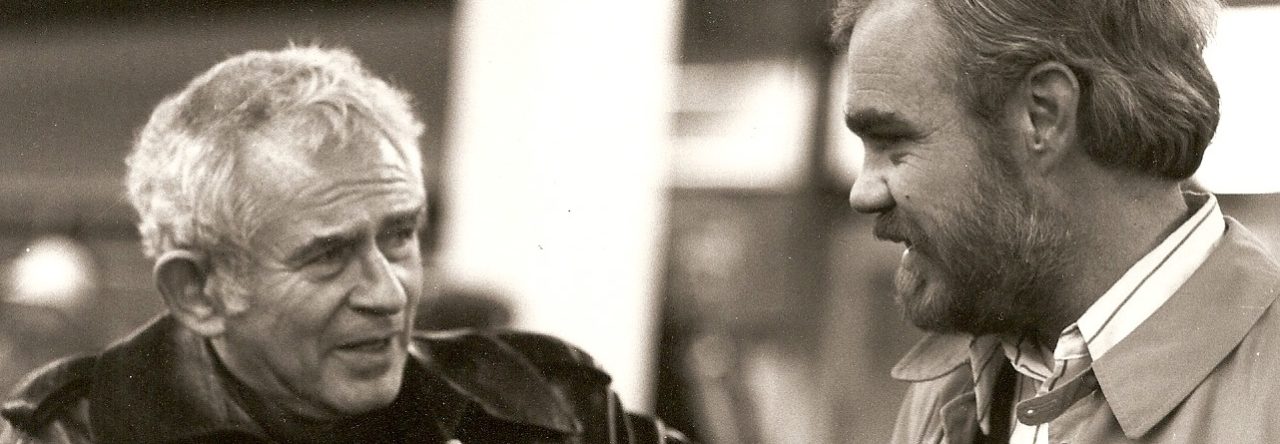
J. Michael Lennon on WRKF: Remembering Norman Mailer and the Origins of The Naked and the Dead
On November 11, 2025, J. Michael Lennon joined Talk Louisiana (WRKF 89.3) for a conversation that balanced literary history with personal memory. Appearing alongside segments featuring Elizabeth Pfifer and Piper Hutchinson, Lennon closed the broadcast with reflections on Norman Mailer—novelist, journalist, World War II veteran, and one of the central figures in postwar American letters. The interview previews themes that continue to animate Lennon’s ongoing work as Mailer’s authorized biographer and archivist.
Lennon’s discussion focused on The Naked and the Dead (1948), Mailer’s first novel and one of the major literary documents of the Second World War. Drawing on decades of archival research, correspondence, and personal acquaintance, Lennon outlined the conditions under which the young writer—fresh out of Harvard and not yet twenty-five—transformed wartime experience into a novel of ambition and scope. The interview emphasized Mailer’s immersion in the Pacific theater, the psychological pressures of infantry life, and the novel’s structural debts to Dos Passos and Tolstoy. Lennon noted that The Naked and the Dead remains both a historical artifact and a study of class, power, and the machinery of modern war.
Lennon also offered brief recollections from his long relationship with Mailer, including the author’s evolving interpretations of his own work. These personal notes illuminated Mailer’s mixture of bravado and introspection, qualities that shaped the novelist’s career from his early success through his vast later output. For listeners unfamiliar with Mailer’s life, the segment provided a succinct biographical frame; for long-time readers, it served as a reminder of Lennon’s role as steward of the writer’s legacy.
The conversation underscored several broader themes that have guided Lennon’s scholarship: the cultural aftershocks of World War II, the emergence of postwar American masculinity, and the literary experimentation that shaped mid-century fiction. The WRKF appearance highlights Lennon’s ongoing commitment to public humanities—bringing Mailer’s work and the materials of literary biography to general audiences.